
One tonne per hectare: why we feed our vines lime
Beaujolais is a land of granite. That pink, friable, crystalline soil gives our Morgon and Fleurie their unmistakable character - fine, spicy, alive. But granite has one major flaw: it is naturally acidic.
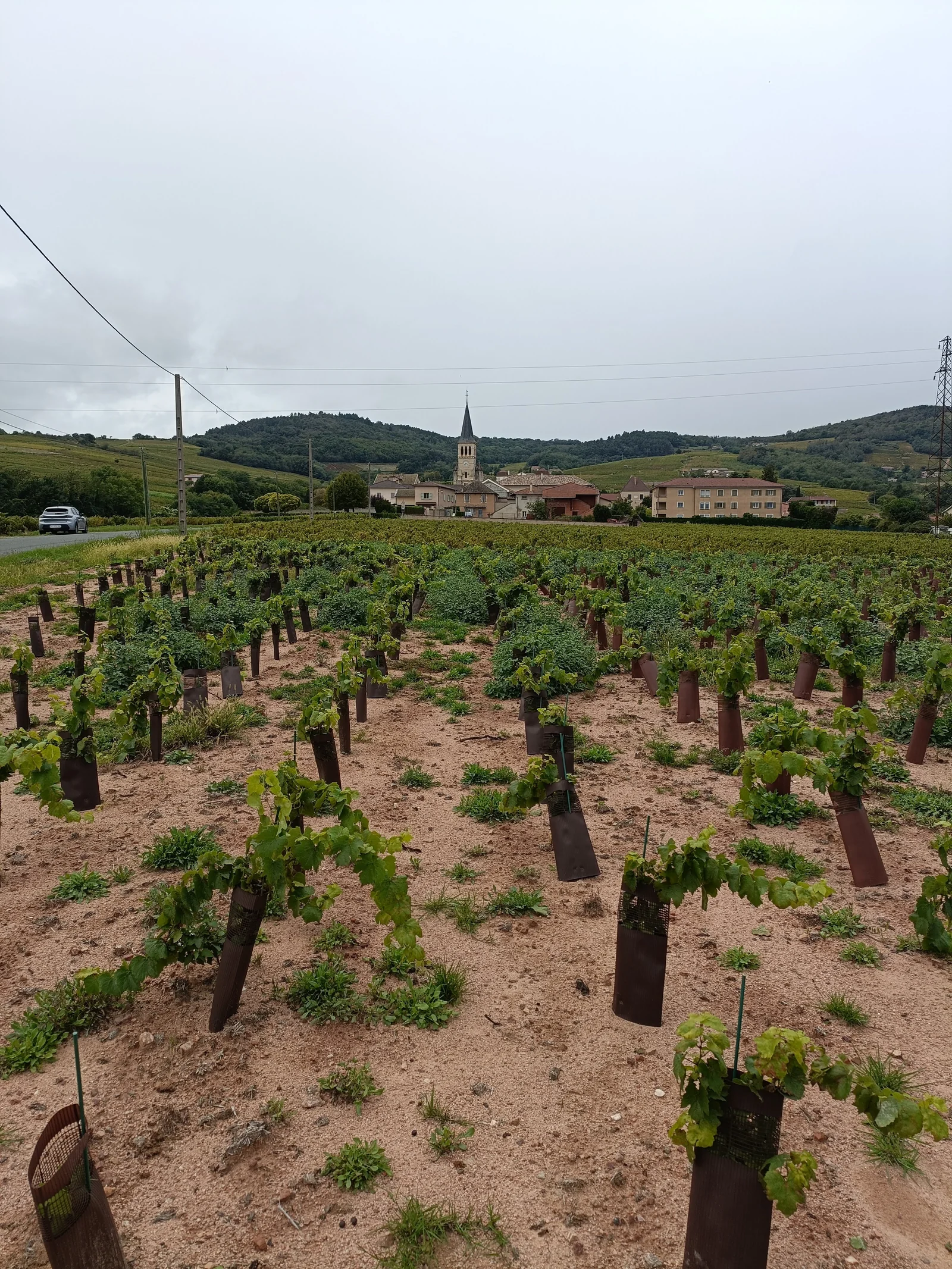
Beaujolais is a land of granite. That pink, friable, crystalline soil gives our Morgon and Fleurie their unmistakable character - fine, spicy, alive. But granite has one major flaw: it is naturally acidic.
The “locked fridge” problem. Why is acidity an issue? In simple terms: when a soil is too acidic, the vine struggles to feed itself. The nutrients are right there, but acidity blocks them chemically. The plant cannot absorb them. Imagine a fridge full of good things - locked. The vine stands hungry in front of a full pantry.
The solution: white gold. To unlock the situation, we apply what we call an “amendment”. This winter, we will spread lime across our parcels. The quantities are striking: about one tonne per hectare.
Lime corrects the acidity (it lifts the pH, in technical terms). Doing so, we “open the fridge door”.
The vine feeds better.
It becomes more resistant to disease.
The grapes ripen in balance.
We don’t feed the plant directly (this isn’t fertiliser); we treat the soil so the soil, in turn, feeds the vine. That is the whole philosophy of our work: respect the soil to make a great wine.
All journal articles